
Categories
New ConstructionPublished October 27, 2026
New construction or resale in the Mat-Su: how do you decide?

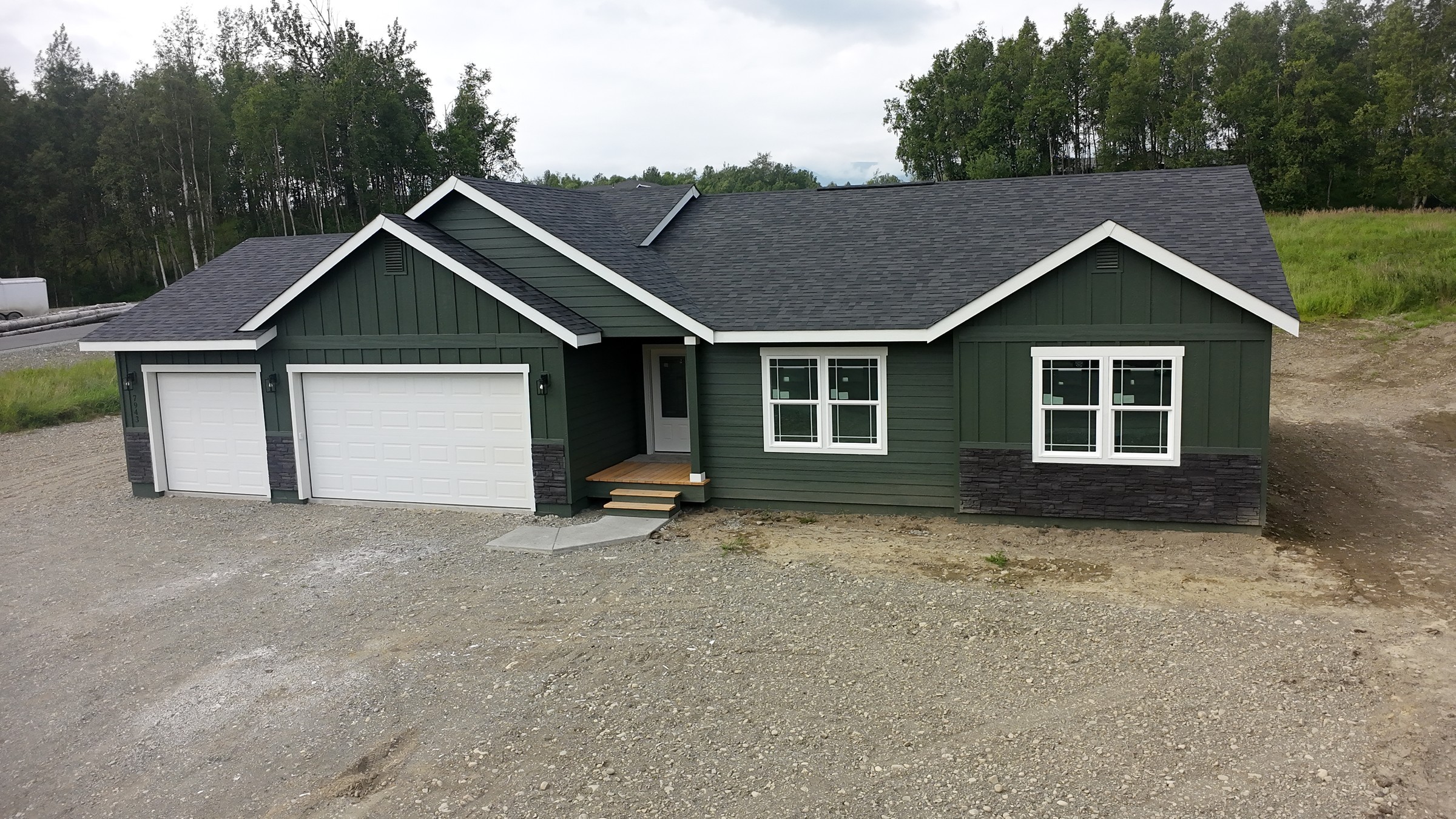
The short answer: Choose new construction if you want a modern, energy efficient home, the chance to pick finishes, and fewer repairs in the first years, and you can work with a builder's timeline. Choose resale if you want to move sooner, value a finished yard and established neighborhood, or want a specific location where no one is building. In the Mat-Su, both are good options, and the right one depends on your timing, budget, and the land.
I'm also the sales and marketing partner for Hall Quality Homes, so I'm biased toward new construction. I've also helped a lot of people buy and sell resale homes in the Valley, and plenty of buyers are better off with one. Here's how I'd think it through.
What are the advantages of new construction in the Mat-Su?
The biggest one is how the home handles winter. Newer homes are built to current energy standards, and for homes financed through the Alaska Housing Finance Corporation, AHFC's Building Energy Efficiency Standard requires at least a 5 Star energy rating. Better insulation, windows, and air sealing can mean lower heating bills and a more comfortable house in January.
You also get new systems throughout: roof, heating, water heater, well, and septic. That usually means fewer surprise repairs in the first years. If you buy early enough in the process, you can often choose finishes and layout options, too.
What are the advantages of buying a resale home?
Resale homes are ready now, which matters if you're relocating, on military orders, or selling another home. They often come with things a new build may not include in the base price, like a finished yard, landscaping, a paved or graveled driveway that has settled, window coverings, and outbuildings.
Resale also opens up locations where there's no land left to build on, older neighborhoods closer to town, and lake or acreage properties that rarely come with a new home. And you can see exactly what you're buying, including how the house and lot handle snow and spring breakup.
How do costs compare?
It depends on the home, so compare the full picture instead of the list price alone. For a new build, ask what's included and what's an upgrade: appliances, garage finish, driveway, landscaping, window coverings, and any well and septic work if you're building on your own lot. For a resale home, budget for the repairs and updates the inspection turns up and for higher heating costs in an older, less efficient house.
Our GPRE agents can pull recent sales of comparable new and resale homes so you're comparing real numbers. A new home may cost more up front, but you're buying time, quality, and the peace of mind of knowing what you have. In my experience in the Valley, new homes have also tended to appreciate faster overall, though every home and every market cycle is different.
What big replacement costs come with an older home?
This is the part many buyers don't think about. Every major system in a house has a working life, and when you buy a resale home, some of that life has already been used. Here are typical lifespans for the big items, based on InterNACHI's life expectancy chart for home inspectors, the U.S. Department of Energy, and EPA:
- Furnace or boiler. InterNACHI puts a furnace at about 15 to 25 years, and hot water boilers often last longer. ENERGY STAR suggests considering replacement once a furnace or boiler is more than 15 years old, since newer equipment runs more efficiently.
- Roof. Asphalt shingles run about 20 years for basic 3 tab shingles and about 30 years for architectural shingles, according to InterNACHI. Weather, ventilation, and upkeep can shorten or stretch that.
- Septic system. EPA says a concrete septic tank may last 50 years or more, but a drain field more than 25 to 30 years old can lose its ability to absorb wastewater, and septic pumps and controls often need replacing every 10 to 20 years. A drain field replacement is one of the most expensive repairs a Valley homeowner can face.
- Water heater. The Department of Energy says storage tank water heaters typically last 10 to 15 years, and tankless models about 20.
- General wear and tear. InterNACHI lists carpet at about 8 to 10 years, interior paint at 10 to 15, deck planks around 15, dishwashers around 9, refrigerators about 9 to 13, and vinyl or fiberglass windows 20 to 40.
These are averages, and plenty of systems outlast them while others fail early. The useful move is to find out how old each major system is and where it sits in its life. Your home inspection will point out the age and condition of the furnace or boiler, roof, water heater, and visible components, and the septic adequacy test covers the tank and drain field. Ask the seller for receipts or records showing when things were replaced, get quotes on anything near the end of its life, and budget for it before you write your offer, not after you move in. With a new home, all of those clocks start at zero.
What should you check with a builder?
A few questions go a long way:
- License. Alaska requires residential contractors to hold a residential contractor endorsement, which includes cold climate building coursework and an exam. You can look up a builder's license on the state's Division of Corporations, Business and Professional Licensing site.
- Energy rating. Ask for the home's energy rating and what's included to reach it.
- Warranty. Ask what the builder's warranty covers, for how long, and how claims are handled.
- Timeline. Ask how long a build typically takes and what could delay it, especially over winter.
Do you still need an inspection on a new home?
I recommend one. A third party inspection on a new build can catch items before closing, and on homes with a new well and septic, the same well flow, water quality, and septic adequacy tests I recommend on resale homes are still worth doing.
Quick answers
Is new construction more energy efficient than resale in Alaska?
Generally, yes. Homes financed through AHFC must meet its Building Energy Efficiency Standard, which requires at least a 5 Star energy rating. Many older homes were built to lower standards.
Does a new build include landscaping and a driveway?
It depends on the builder and the contract. Ask for a written list of what's included in the base price.
How can I check a builder's license in Alaska?
Look up the builder on the Alaska Division of Corporations, Business and Professional Licensing website. Residential builders need a residential contractor endorsement.
Should I get a home inspection on new construction?
I recommend it, along with well and septic tests when the home has private systems.
What replacement costs should I plan for when buying an older home?
Look at the furnace or boiler, roof, water heater, and septic system first, since those are the big ticket items. Typical lifespans run about 15 to 25 years for a furnace, 20 to 30 years for an asphalt shingle roof, and 10 to 15 years for a tank water heater, and EPA says drain fields more than 25 to 30 years old can start to fail. Ask the age of each, and get quotes on anything near the end of its life.
Can I use a real estate agent to buy new construction?
In most cases, yes. Bringing your own agent to the first visit is usually the easiest way to make sure that works with the builder.
If you're weighing new against resale, take a look at our new construction page, browse homes for sale in Wasilla, or send me a note. I'm glad to help you compare both side by side.
About the author: Tyson Kroon owns Gathering Place Real Estate, brokered by Real Broker Wasilla, and has been part of close to 1,500 property sales in Southcentral Alaska. He grew up in Anchorage and now lives and works in the Mat-Su Valley.
Sources: Alaska Housing Finance Corporation, Building Energy Efficiency Standard, ahfc.us. State of Alaska, Division of Corporations, Business and Professional Licensing, Construction Contractors and Residential Endorsement, commerce.alaska.gov. Alaska Craftsman Home Program, residential endorsement courses, achpalaska.com. InterNACHI, Standard Estimated Life Expectancy Chart for Homes, nachi.org. U.S. Department of Energy, Which Water Heater Is Right for You?, energy.gov. ENERGY STAR, When is it time to replace?, energystar.gov. U.S. EPA, Frequent Questions on Septic Systems, epa.gov.
Gathering Place Real Estate | Real Broker Wasilla | Tyson Kroon | Equal Housing Opportunity | REALTOR®

Tyson Kroon
| Gathering Place Real Estate | Real Broker, LLC
or another way