
Categories
LandPublished October 26, 2026
What should you check before buying land in the Mat-Su?

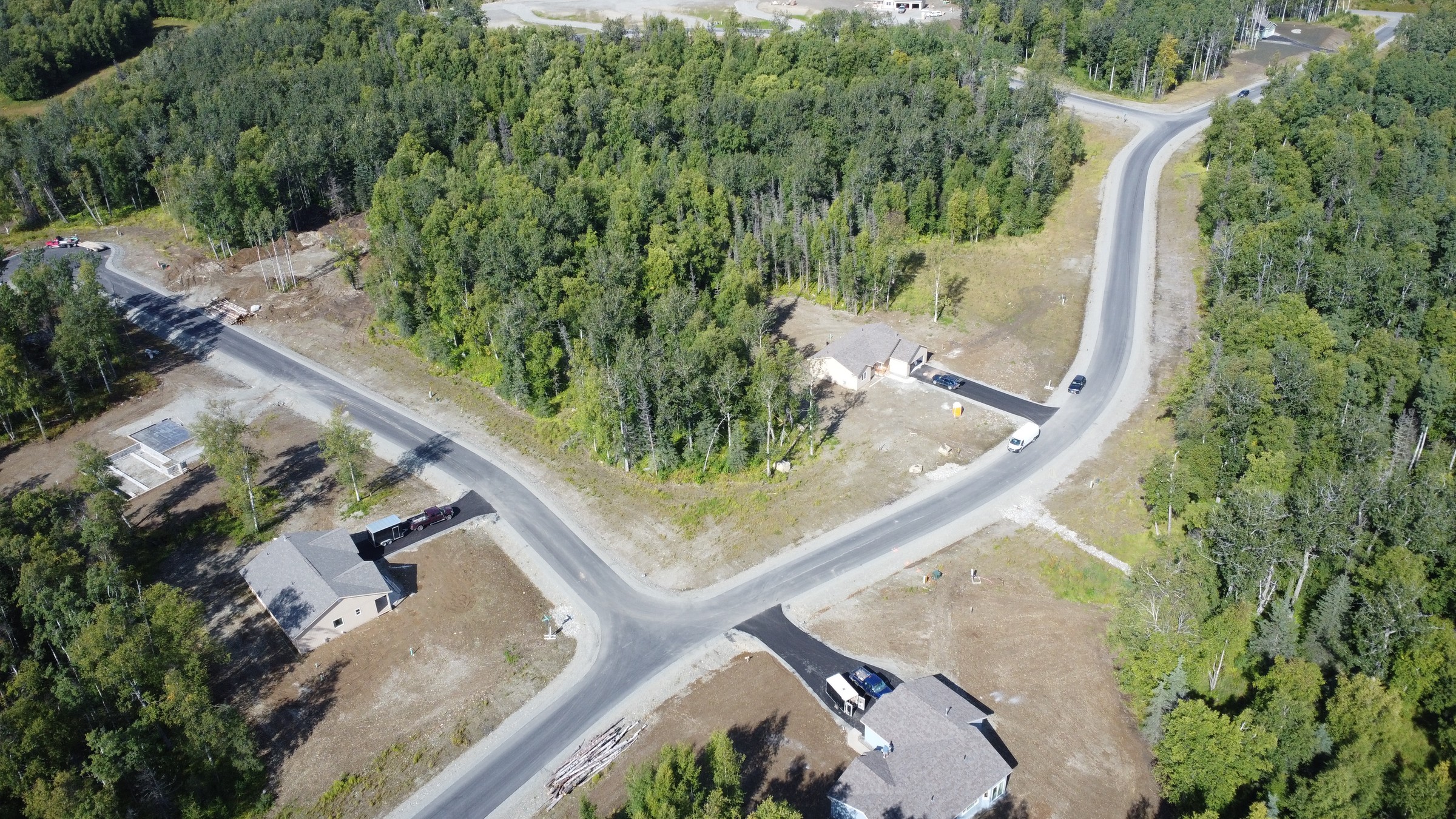
The short answer: Before you buy a lot or acreage in the Mat-Su, confirm legal and physical access, look for wetlands and floodplain, make sure the soil can support a septic system and there's a realistic path to water and power, and read the plat, covenants, and borough rules that apply. Land is cheaper to walk away from before closing than to fix after.
I talk with a lot of people who want to build in the Valley, and the ones who end up happiest did their homework on the land first. Here's the checklist I walk through with land buyers.
Can you get to the land, legally and physically?
Start with access. A parcel needs recorded legal access, such as a dedicated public road or a recorded easement, and it needs a road you can actually drive. Those aren't always the same thing. Some platted roads were never built, and some driveways cross a neighbor's land without an easement.
Also ask who maintains the road. In the Mat-Su, some roads are maintained by the borough through road service areas, some by the state, and some are private, which can mean sharing plowing and grading costs with neighbors. If you'll need a new driveway onto a borough road, plan on a driveway permit.
Is there wetland or floodplain on the parcel?
This is one of the most common surprises in the Valley. If you need to fill wetlands to build a pad or driveway, you may need a Section 404 permit from the U.S. Army Corps of Engineers, Alaska District. Their website has a "Do I need a permit?" guide, and it's worth checking before you write an offer on a low or wet parcel.
The borough also requires a floodplain development permit for building in mapped flood hazard areas. You can check a parcel against the FEMA flood maps through the borough's mapping tools.
Will the soil support a septic system?
Most land outside city limits will need a well and septic. Under DEC's onsite wastewater rules, a septic absorption field needs enough separation above the seasonal high water table and any impermeable layer, plus setbacks from wells and surface water. A soils test (often called a perc test) on the parcel tells you whether a conventional system will work or whether you'd need an engineered design. If a seller already has test results, ask for them.
How will you get water and power?
For water, look up nearby well logs in the Alaska DNR well log database (WELTS) to see how deep neighbors drilled and how much water they found. It isn't a guarantee for your lot, but it's a good clue.
For power, Matanuska Electric Association (MEA) serves most of the Valley. MEA has an online new service process where you can request an estimate for bringing power to a lot, and it offers a New Service Allowance credit for permanent service. The cost depends a lot on how far the nearest line is.
What rules apply to building on the land?
The borough says it plainly on its zoning page: zoning, land use, and building regulations do exist in the Mat-Su. Some areas have special land use districts, and many subdivisions have covenants (CC&Rs) that set minimum home sizes, outbuilding rules, or animal limits. Read the recorded plat and covenants before you buy. You can search plats and recorded documents through the Alaska DNR Recorder's Office for the Palmer recording district.
If the land is near a lake, river, or stream, the borough requires a mandatory land use permit for structures within 75 feet of a waterbody, outside the cities of Palmer, Wasilla, and Houston. Inside city limits, city zoning and permits apply, and the City of Palmer does building inspections.
Before you build, check with the Mat-Su Borough about which permits apply to your plans, and with the city too if the land is inside Palmer, Wasilla, or Houston. DEC rules, setbacks, and covenants apply either way, and your lender may require its own inspections.
Who should you talk to before making an offer?
A short list helps: the borough for zoning, setbacks, and flood maps, MEA for power, a well driller and a septic designer or engineer for the parcel, and a builder if you plan to build right away. I'm also the sales and marketing partner for Hall Quality Homes, so I'm biased toward new construction. Even so, the advice is the same whoever builds your home: understand the land before you commit to it.
Our GPRE agents can help you build these checks into your purchase agreement as contingencies so you have time to get answers.
Quick answers
Do I need a building permit to build a house in the Mat-Su Borough?
Check with the Mat-Su Borough about which permits apply before you build, and with the city as well if the land is inside Palmer, Wasilla, or Houston. Setbacks, DEC septic rules, and covenants still apply.
How close can I build to a lake in the Mat-Su?
Outside Palmer, Wasilla, and Houston, the borough requires a mandatory land use permit for structures within 75 feet of a waterbody. Septic systems need at least 100 feet from surface water.
Do I need a permit to fill wetlands?
Often, yes. Filling wetlands can require a Section 404 permit from the U.S. Army Corps of Engineers.
How do I find out if a lot is in a floodplain?
Check the FEMA flood maps through the borough's mapping tools. Building in a mapped flood hazard area needs a borough floodplain development permit.
How do I get power to a lot in the Valley?
Contact Matanuska Electric Association. MEA has an online new service process and can give you an estimate based on the distance to existing lines.
If you're shopping for land or thinking about building, read our buying guide, look at our new construction page, or reach out to me. I'm happy to walk a parcel with you before you make an offer.
About the author: Tyson Kroon owns Gathering Place Real Estate, brokered by Real Broker Wasilla, and has been part of close to 1,500 property sales in Southcentral Alaska. He grew up in Anchorage and now lives and works in the Mat-Su Valley.
Sources: Matanuska-Susitna Borough: Zoning; Mandatory Land Use Permit; Floodplain Development Permit; Flood maps; Road Maintenance; Fire and Life Safety, matsugov.us and matsu.gov. U.S. Army Corps of Engineers, Alaska District, Regulatory: Do I Need a Permit?, poa.usace.army.mil. Alaska Department of Environmental Conservation, Onsite Wastewater (18 AAC 72), dec.alaska.gov. Alaska Department of Natural Resources: Recorder's Office search; Well Log Tracking System (WELTS). Matanuska Electric Association, New Construction and New Service, mea.coop.
Gathering Place Real Estate | Real Broker Wasilla | Tyson Kroon | Equal Housing Opportunity | REALTOR®

Tyson Kroon
| Gathering Place Real Estate | Real Broker, LLC
or another way